7 Days to Die is a first-person survival horror game that combines elements from various genres, such as tower defence and RPGs. The gameplay leans towards humans vs zombies, but PvP is available if desired.
Gameplay uses a first-person view and this game is similar to Minecraft on many levels. You build structures from resources, like cutting trees for a hideout or digging an underground base. Both games feature threats from creatures, but 7 Days to Die focuses more on fortifying the base during the day, completing quests for money, and exploring for supplies. At night, hiding from monsters is the safer option, especially early in the game.
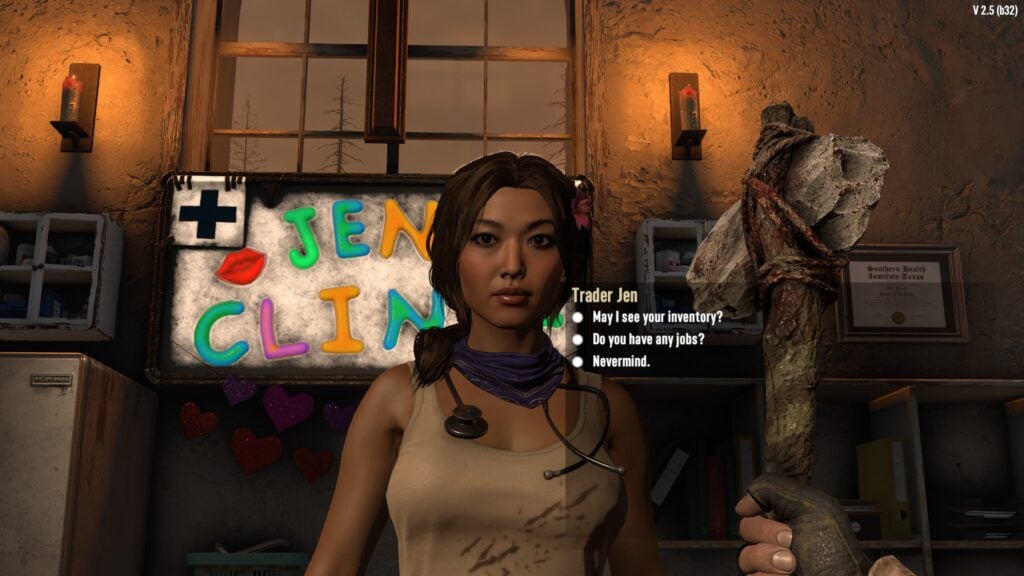
7 Days to Die is tougher and more complex than Minecraft. You can craft more items, like weapons, food, and armour, but face more zombies. Always staying quiet is a necessity, as zombie’s sense noise. Cutting trees or searching bins near zombies may attract them. Zombies detect light, so using a torch or light mod makes you a target. Silent weapons are best for potential sneak attacks, which offer bonus damage, especially with a knife or bow.
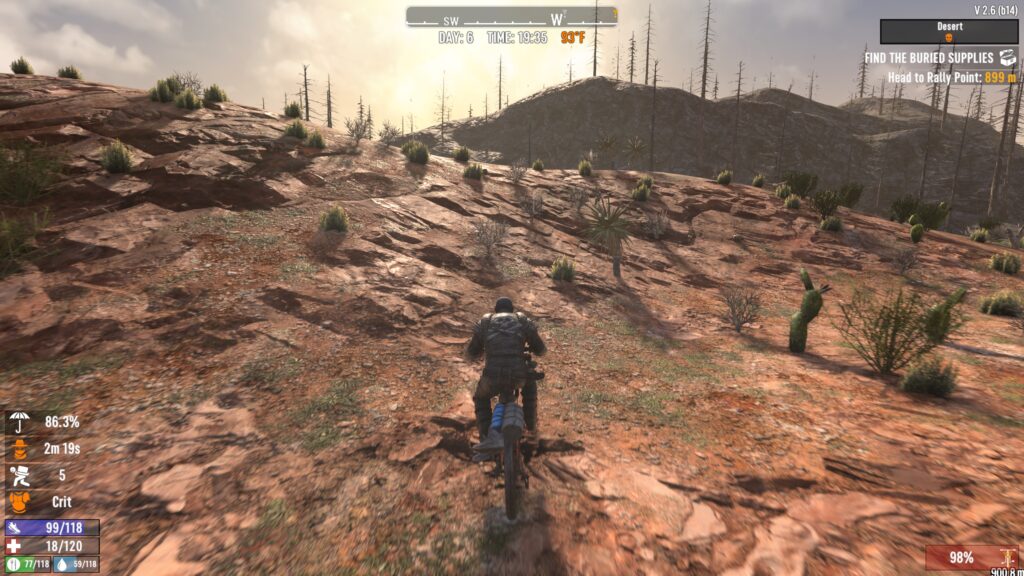
7 Days to Die offers a realistic zombie apocalypse setting. It is darker in tone and colour than many other games within the building/survival genre, especially in the wastelands, the game’s toughest area to survive because of stronger monsters.
The world in 7 Days to Die is fraught with danger, as zombies spawn everywhere. Wastelands, cities, and factories are especially deadly if you’re not prepared. Factories and shops are tough to tackle on your own. By default, zombies get faster and deadlier at night, so staying quiet and hidden in your base becomes crucial. You can adjust these settings if you wish.
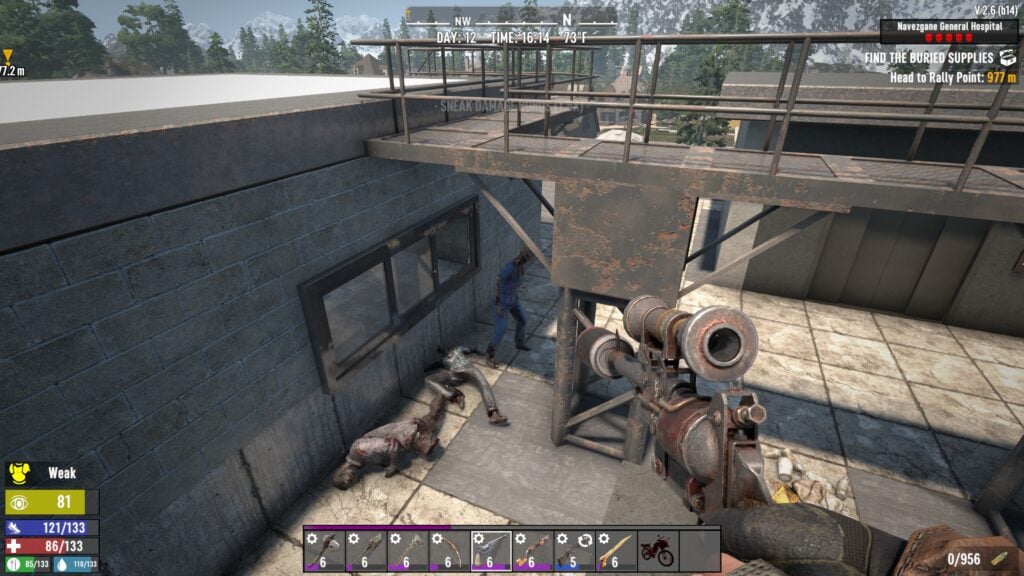
During the first week, days are quiet, letting you complete tasks. On the 7th day, a zombie horde attacks at night. Use the daytime to fortify your base and collect supplies. At night, you can’t flee, as the horde surrounds you. Survive by fighting off zombies and fixing your base. Avoid straying far from your base or relying on melee combat at night.
PVP servers are more dangerous because players can attack at any time. Server rules differ: some allow unrestricted PVP, others use clans. Zombies may be present or not. I preferred solo play over PVP-focused servers.
This game also features some RPG mechanics through the use of skill trees.
In game you earn experience which gives you points when you level up. The character skill trees give points for levelling skills like mining or regeneration. I levelled up skills as needed. In single-player, I focused on gathering and combat skills. Survival depends on you and your chosen settings, especially with permadeath settings.
The last skill tree levels up by reading books found in places like bookshops and churches. Some sets need up to 100 books to unlock top items. There are also multiple series of books, each granting a perk, plus a final bonus for completing the series.
My review is depending on preferences. The game is best for cooperative multiplayer, letting players work together to survive. Playing with others helps finish daytime tasks faster. At night, especially on the 7th day, teams can split up: some repair the base while others fight zombies or enemy players from a distance. As a single-player game, it is demanding and requires effort, persistence, and the ability to play multiple roles. If you like cooperative multiplayer games or single player games that are tough and rewarding this is a game I highly recommend to you.


