Disclaimer: I’m playing the game through steam family. However, this doesn’t affect my review, as I don’t do biased reviews.
Spellcaster University is a resource management game where you run a magic university in a fantasy setting. Your objective changes by level, and each level gives you different areas to build your university. Each level is a race against time to complete various objectives before the dark lord destroys your university at the end. This continues until the last stage, where you complete quests to defeat the dark lord once and for all.
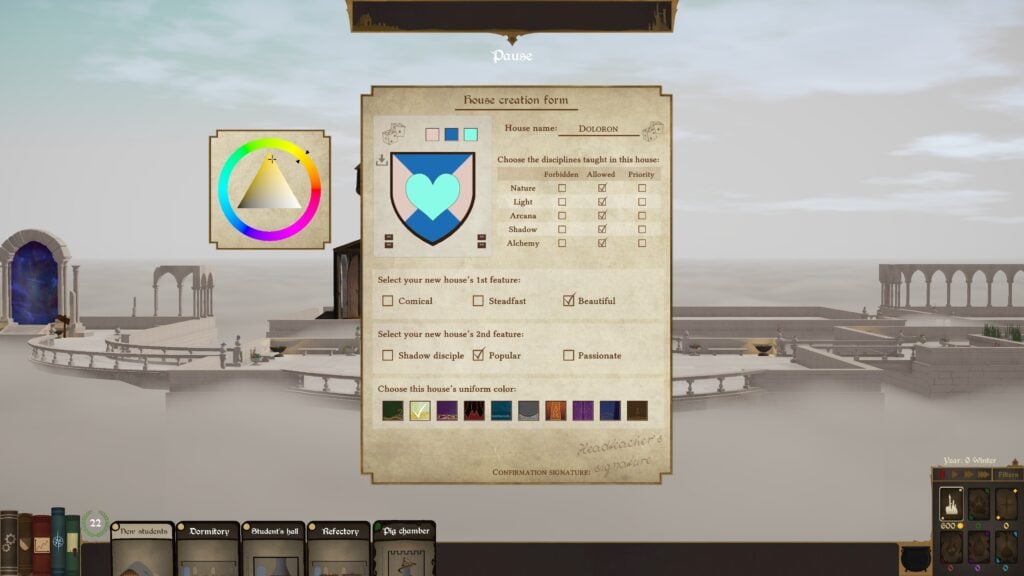
Many people who base their opinion of the game will expect a management/tycoon game set in a Hogwarts-style setting. There are many similarities, such as the setting and the ability to place students in different school houses.
However, this is where the game differs. It isn’t a complete tycoon game. At the start, you are given resources to build a school, such as a couple of school houses, students, a classroom, and a refectory. The supplies you are provided with help you at the start,but they won’t be enough later on.
In this game, you earn points to get a deck of cards and choose one of three items. The game has various currencies, but gold is the main currency. Other currencies depend on the magic practised in the school; for example, if you focus on potion making and create many potion classrooms, you will only earn alchemy points. These currencies also limit what you can buy, while gold covers general items such as refractories. The other currencies unlock rooms and items tied to their field, such as alchemy items like potion classrooms and devices that boost students in that subject.
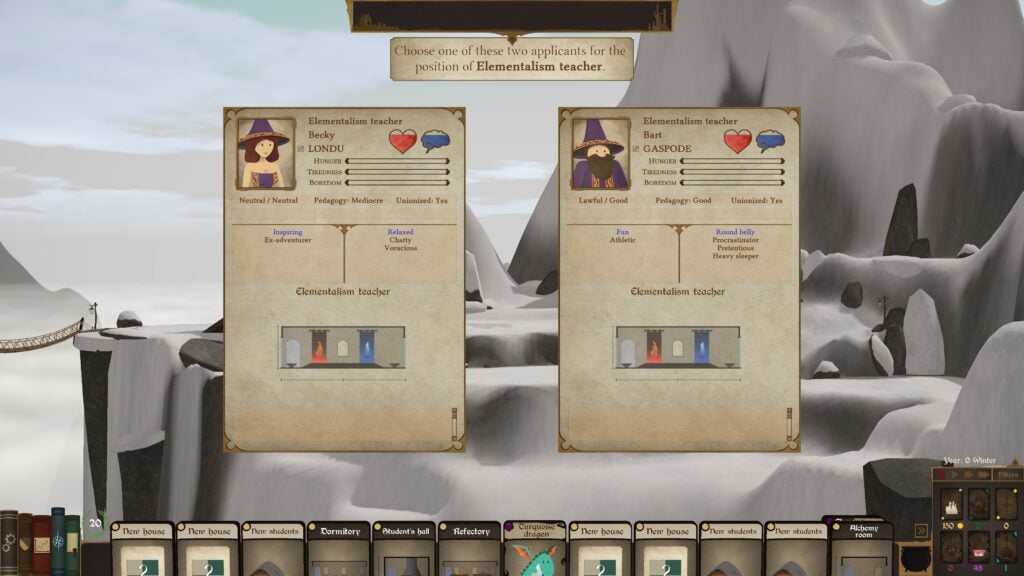
However, even though it may seem OK to use a deck system instead of picking the item you need, the game relies too heavily on RNG. In fact, this game uses RNG mechanics almost everywhere. Whether it’s in-game events like dungeons and factions, the cards you get from each deck, which students you have, or their futures, randomness shapes too much of the experience. The teachers in-game are another problem I came across. When you build a classroom, you are given a binary choice of who you can hire. In many instances, it is one ok teacher and one good teacher, so it’s easy to cherry-pick. I dislike that you cannot change teachers later on.
The dungeons are a neat distraction, but I found them a bit of a letdown. You can access dungeons if unlocked instead of visiting a faction. When accessing dungeons, you have to choose which four students to send. When choosing students to go to the dungeons, you are better picking higher-level students. This is because different schools of magic are featured in different instances. I found the dungeons repetitive and heavily influenced by RNG mechanics. They are based on choices such as continuing or retreating, and sometimes you face events where you must decide what to do, such as helping a dwarf or destroying a cultist base. Dungeons are useful for gathering resources, but if you go too deep, you can lose your students to the monsters.
I dislike the RNG mechanics, as this game won’t let you make a real plan. Instead, you have to improvise with the equipment you have. For a game in this genre, I feel relying on these mechanics is poor as it makes the game less strategic and more luck-based. I’d also apply this to students, as I would have liked a rota for them. This is especially true for levels where you need many students to graduate with a specific career. I say this because there is a plethora of careers on offer, from non/lesser magic careers such as a peasant and midwife to magical careers such as an archmage or exorcist.
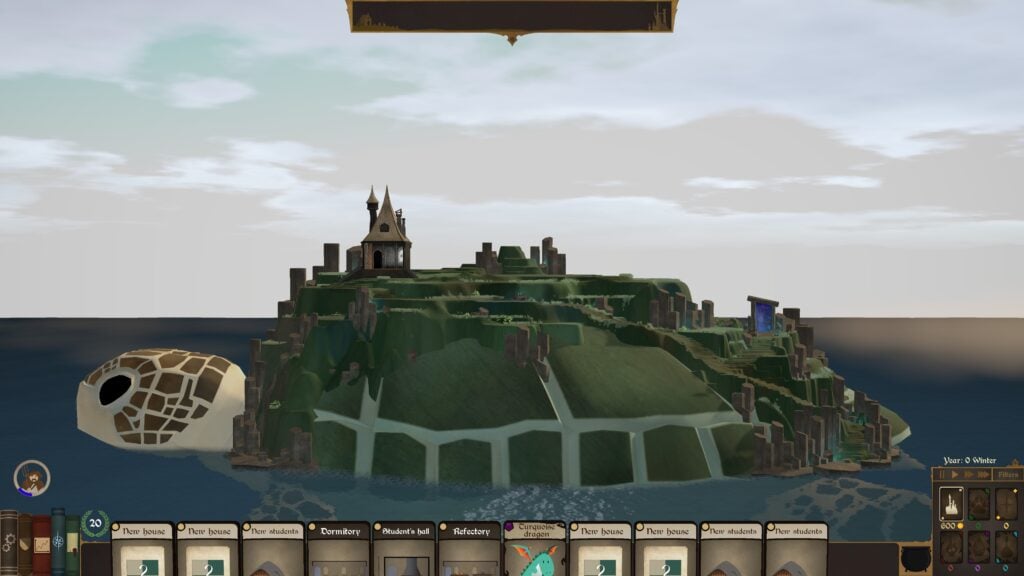
Despite the game’s flaws, I still like it. Even though its design is questionable. I feel the game works best as a survival-based management game rather than a tycoon game. Your resources are what you use to make the best of your situation, and like many survival horror games, you don’t always get to make a long-term plan. The visual design is well drawn, the animations are well done, and the artwork is high quality and rivals what you would see in a cartoon. As you may expect, I can happily recommend this game despite its flaws. The game is charming, has depth, and offers many hours of fun. This makes it easy to overlook its issues and making it worth your time.


