Growing Up is a life simulation game about living life from birth and growing up over time in the 1990’s. The game starts with you choosing your gender or letting the game decide. Although this is a good start, you can’t fully customise your character at the start. However, you customise some aspects later, such as hair colour/cut and clothing. While you can customise a lot, you can’t change some aspects of your character, such as skin and eye colour. Even though there is many customisations in-game I felt that it makes no effect in game.
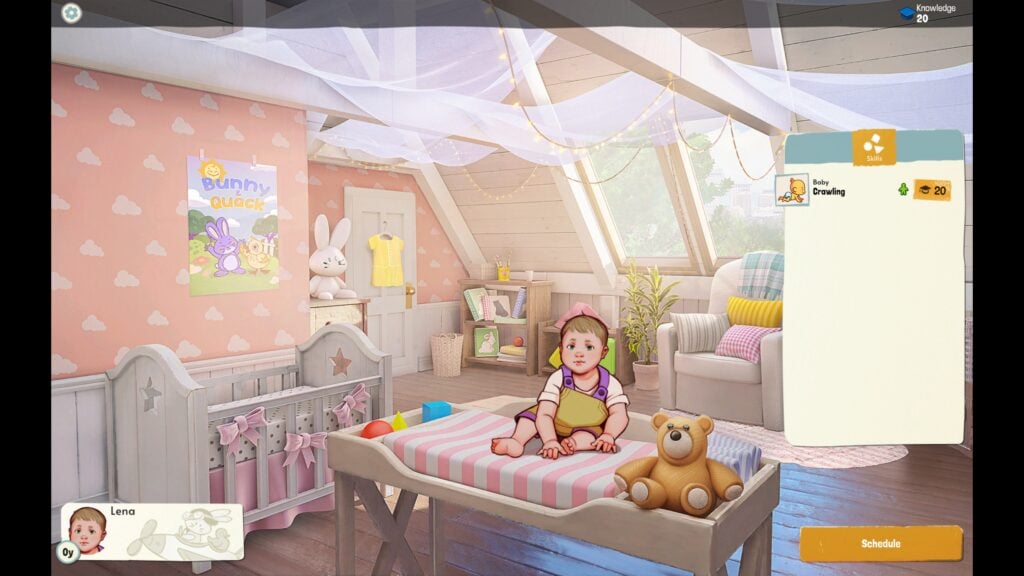
The premise of the game is that you start from birth, and gameplay changes year by year. The early years focus on your parents’ influence and basic development. Later years focus on revising for exams and balancing needs such as meeting parental expectations. Each section of the game is based on what the player decides to do with their limited time and resources, such as studying, working, resting, or engaging in extra activities. Every in-game decision impacts your character’s stats and parental approval.
Action’s made in-game also unlock or block future potential. This game is based around real-life trade offs: mastering one skill this means you can’t master other skills. In this game, you also cannot fail to meet your parent’s expectations or reduce your mental health to zero too many times. The game has a 3-strike system where if you fail to meet expectations or have no mental health, you earn a strike. If you get 3 strikes, it is game over.
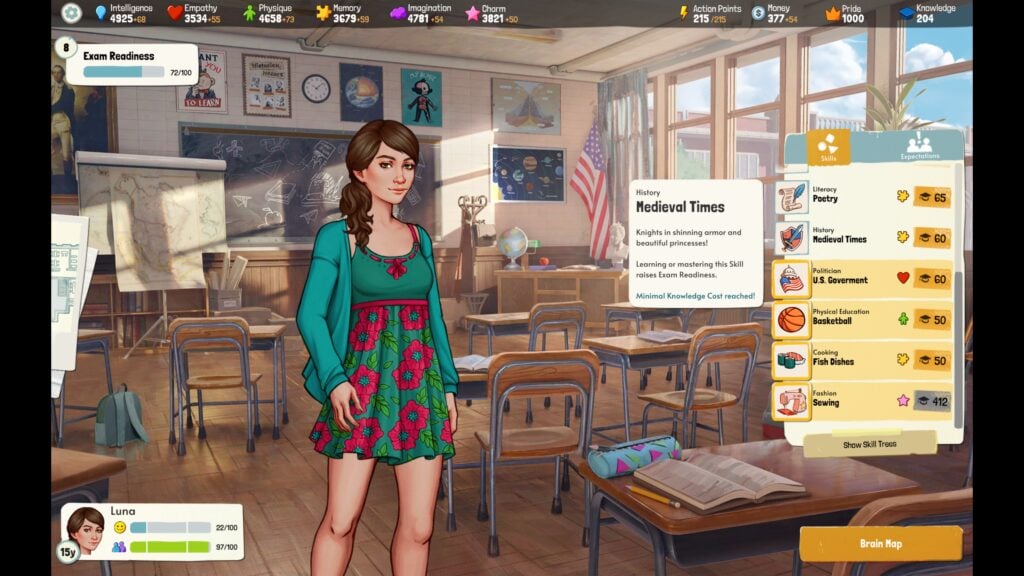
While it is technically a simulation of growing up in the 1990’s, it also has role-playing aspects. In this game, you make choices for your character in various ways, such as the character’s stats in the brain tree. You also have action points, which determine how much time you have to spend. On top of that, there is a schedule you use to do extra activities and choose what to learn, etc. Your choices in-game do make an impact, as they decide what paths you can take.
But one thing I don’t like about the stats is the way it is done. In school, your character can only perform certain tasks at each age. I would have liked more school activities from a young age, such as colouring in preschool or playing sports from elementary school onwards. This could also influence who you meet/what you do. I also think it is strange, as there is an American football team in high school. Yet you cannot join in if you want to, so you don’t get to meet the entire team by playing American football. However, you only get to meet the star player as he throws a ball at you.
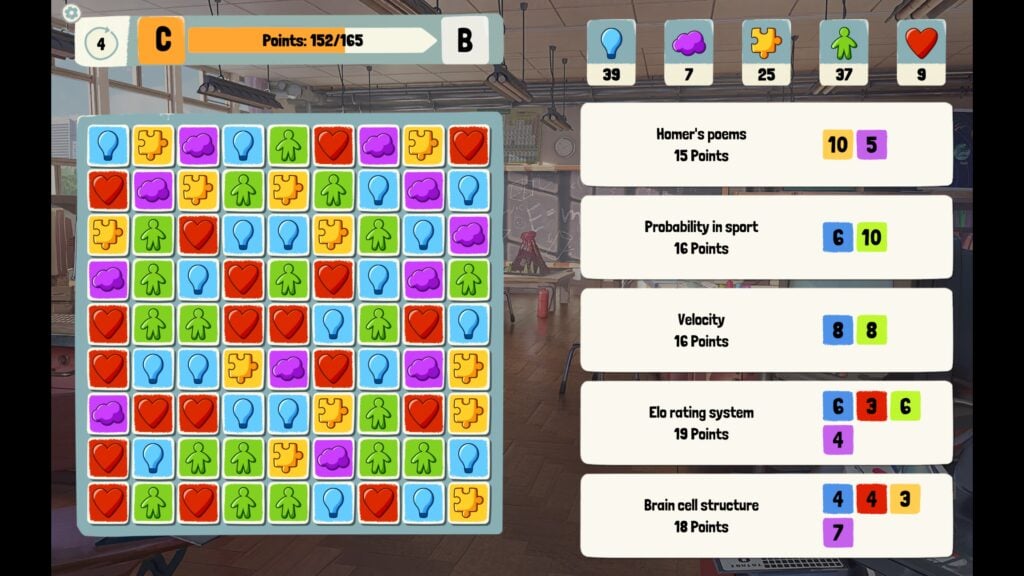
Exams are another bizarre part of the game. I think it is a good addition to the game because it reflects the real world. But the delivery of exams is flawed, as you can prepare by studying various subjects to gain exam preparation points by completing fields in one specific area, such as science. But if you wanted to neglect literature, you could, and it doesn’t mean you will gain fewer exam points. I think this is a strange choice, as the exam is one subject put together rather than English one day, maths the next day, etc.
When you take the exam, you have to match blocks of different stats in a grid. This is to gather points to answer questions. Each subject has a 5-choice block, and to answer each question you need a certain number of points. From this, you can conclude that having a strategy for which blocks to pick is a wise move. However, the blocks that drop are randomised and what you can get isn’t always in your favour.
This game can be seen as an RPG, but it doesn’t really give you many choices. The main choices in the game are the activities you do, how you invest your points on the brain map, what you make matches from in the exam, and the social decisions you make. Personally, I would have liked more choices available in the game. Making friends is a great example. This game gives you only a select few people to be friends with. In real life, the options are much easier. Take elementary school, for example, as a place where you can make friends. In real life, it is easier to make friends in primary school than in high school.
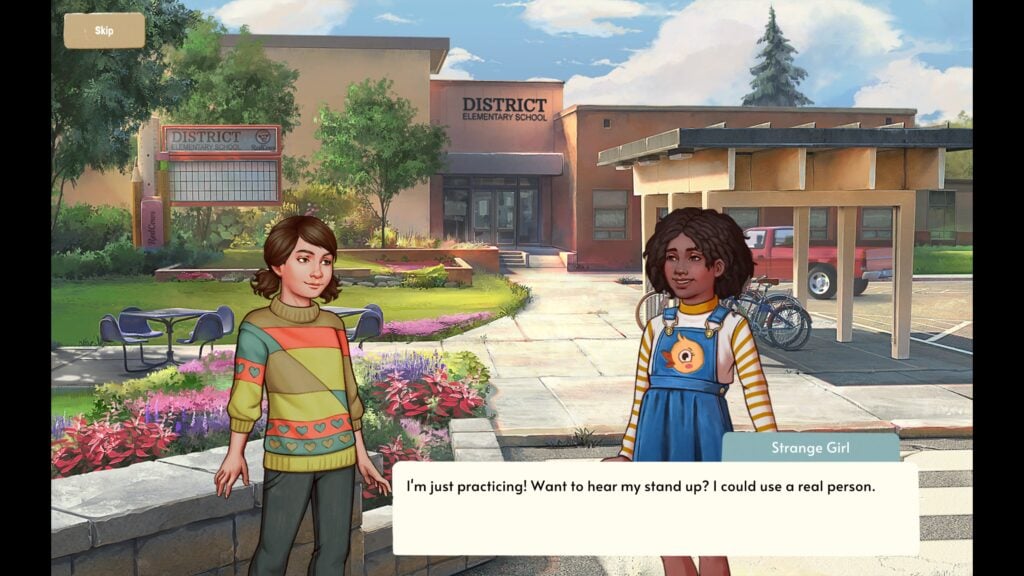
In primary school, you can go up to a table/group and make friends based on what cartoon character is on their shirt. Alternatively, friendships could be based on what activities they are doing, which could influence what you do, such as colouring or playing sports. The game should have an option to go up to other kids in the class and ask if you can play with them based on what they are doing/what clothes they are wearing. In real life, the older you get, the more unreasonable it becomes to use the tactic of asking someone to play with you, since it usually doesn’t get you very far.
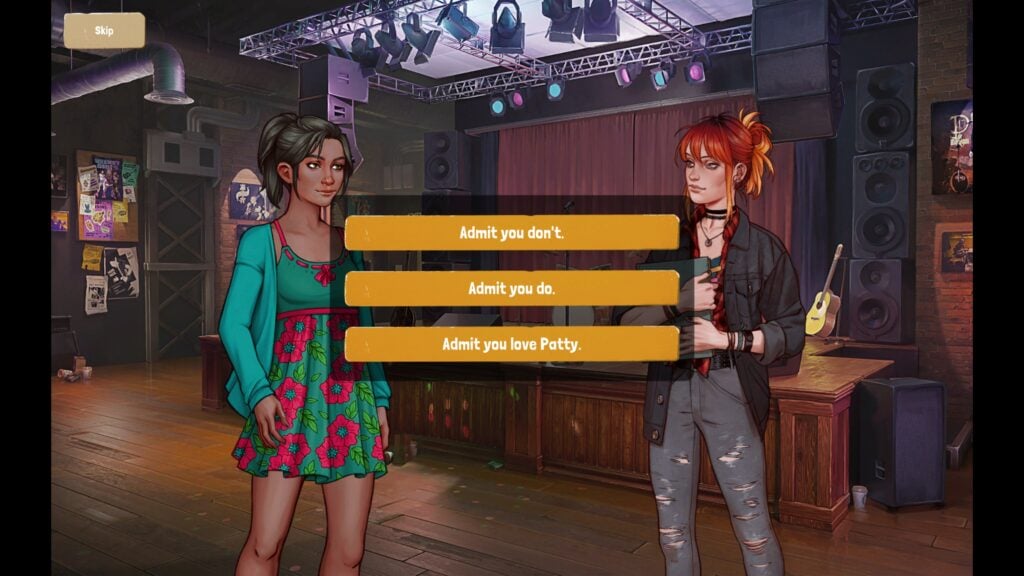
But in this game, you can only make friends in specific situations. For example, if you are in a gym class session and there is an instance of bullying. In this scenario, the game provides you with a binary choice. The first option offered is to stick up for the classmate. The alternate option is to join in on the bullying. In this game, most social options are binary choices, each with their own rewards. In some instances, you get 3 options, but it is mostly limited to friendship/romance options.
Socially, though, at the start of the game you get one person who you can befriend if you want. However, this person will stick with you in some form, even if it is just the occasional crossing of paths. Generally, the first friend you make is a loner of some kind, and they are very good at one thing, whether it is a gamer that rules the leaderboards at an arcade or a musical prodigy. Outside of that, you can befriend people of your choosing. But many of the people you can befriend are stereotypes of high school personalities such as a socially awkward nerd. I think the game should have had personalities that are varied, not just caricatures.
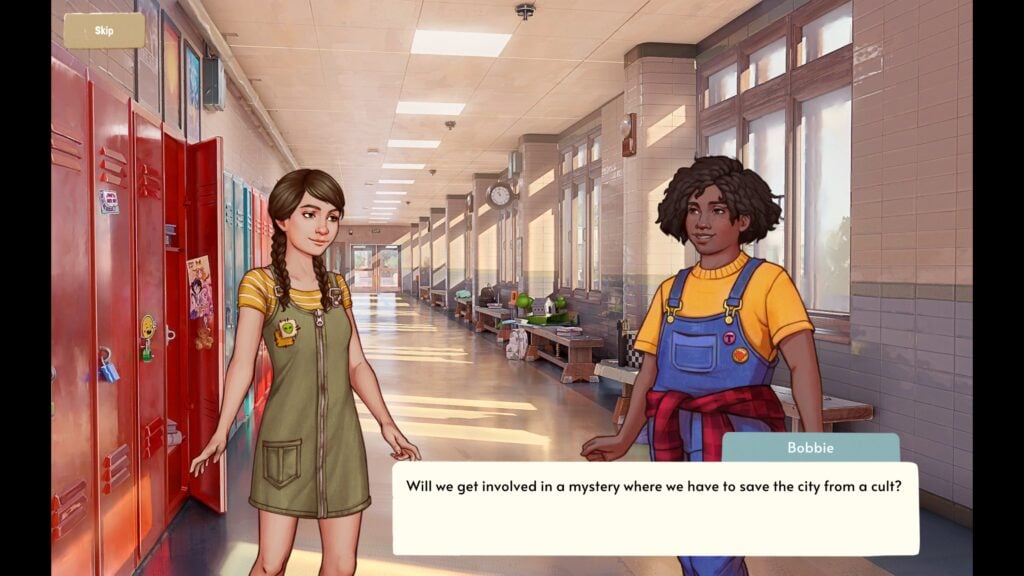
Overall, I can generally recommend this game when it is on sale. I think the game is fun, and each playthrough lasts around 2 hours, give or take. But over time, it can get repetitive. I will also add that this game had a lot of potential, but the game isn’t as good as it could have potentially been.


